FlemingClans.com

"Scotland's Fleming Clan: a Genealogical History" - coming in 2027!
 16th chief - John Fleming, 5th Lord Fleming
(c1528 - 1572)
Basic information about this person: \click here\
John, 5th Lord Fleming, was the most steadfast supporter of Mary, Queen of Scots. He held Dumbarton Castle for her for almost three years after her flight to England, was forfeited as a traitor, and died of a wound received while defending Edinburgh Castle in her cause.
Younger son
John was born around 1528, the second son of Malcolm, 3rd Lord Fleming, and Janet Stewart. In 1541 his father gave him lands in Selkirkshire and Peeblesshire, including Sunderland and Mossfennan, and he spent time in France in the 1550s. In 1558 his brother James settled the family estates on him, and when James died in France that December John became 5th Lord Fleming.
Chamberlain to the Queen
Queen Mary returned from France in 1561, and John, her first cousin, quickly became one of her trusted household. His sister Mary was one of the “Four Marys” who had been with the queen since childhood. In 1565 he was made Great Chamberlain for life, Privy Councillor and Master Usher of the Queen’s Chambers, and Governor of Dumbarton Castle. He was present at Holyrood on 9 March 1566 when the queen’s secretary David Rizzio was murdered, and was himself a target of the conspirators.
In April 1567 he signed the Ainslie Tavern Bond, which supported the Earl of Bothwell’s bid to marry the queen. He was with Mary at Carberry Hill on 15 June 1567, when she surrendered to the rebel lords and was imprisoned in Loch Leven Castle. John withdrew to Dumbarton Castle, where the queen’s supporters drew up the Dumbarton Bond.
Langside and London
After Mary escaped from Loch Leven in May 1568 John joined her, and he fought for her at Langside on 13 May. When she fled to England he went to London as her ambassador. He met Queen Elizabeth and her council, carried messages between Mary and the Spanish ambassador, and in October 1568 was one of Mary’s representatives at the York conference that examined the charge that she had murdered her husband Lord Darnley. Meanwhile the Scottish Parliament found him guilty of treason, and in November 1569 he was forfeited of all his lands.
Defender of Dumbarton
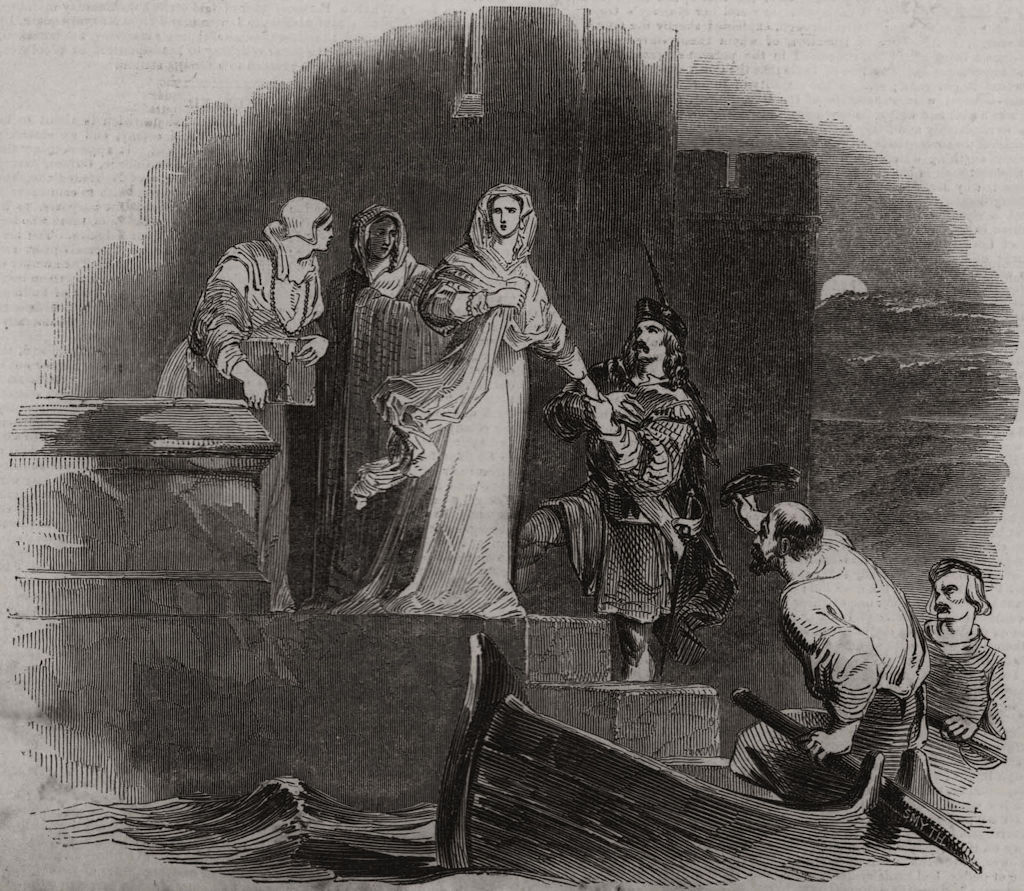
John refused to surrender Dumbarton Castle to the Regent, and for almost three years it was the queen’s main stronghold in Scotland and her link with France. He survived a siege by the Regent Moray in early 1570, which ended when supplies arrived from France and Moray was assassinated, and in December 1570 the Laird of Bord brought supplies by sea under cover of darkness.
In the early hours of 2 April 1571 Captain Thomas Crawford of Jordanhill and his men scaled the great rock and took the castle by surprise. John escaped in a small boat to Argyll. The Archbishop of St Andrews, who was captured in the castle, was hanged at Stirling a few days later.
Death in the queen’s cause
In May 1572 John returned to Scotland and joined Sir William Kirkcaldy of Grange, who was holding Edinburgh Castle for the queen. On 5 July 1572 he was wounded in the knee by a bullet fired by his own side, and the wound became infected. He died at Boghall Castle, Biggar, on 6 September 1572.
Family and legacy
John married Elizabeth Ross, sole heiress of Lord Ross. Their children were Mary, Jean, Margaret, Elizabeth and his heir John, later 1st Earl of Wigtown. He also had a daughter, Lucrece, by Nicolas Somerville. His motto was “Lat the deid schaw”, “Let the deed show”, and his nickname, “the Defiant”, reflects his refusal to abandon his queen.